Research guidance for students and collaborative planning with faculty.
Consultations give me time to understand the questions students and faculty bring, and work through the next step together. I ask questions, demonstrate resources, and make room for people to try, reflect, and decide for themselves. This is how experiential learning carries into my everyday work as a librarian.
Student Consultation
Two BUS 123 projects illustrate how I adapt my guidance to the students’ questions and the stage of their research.
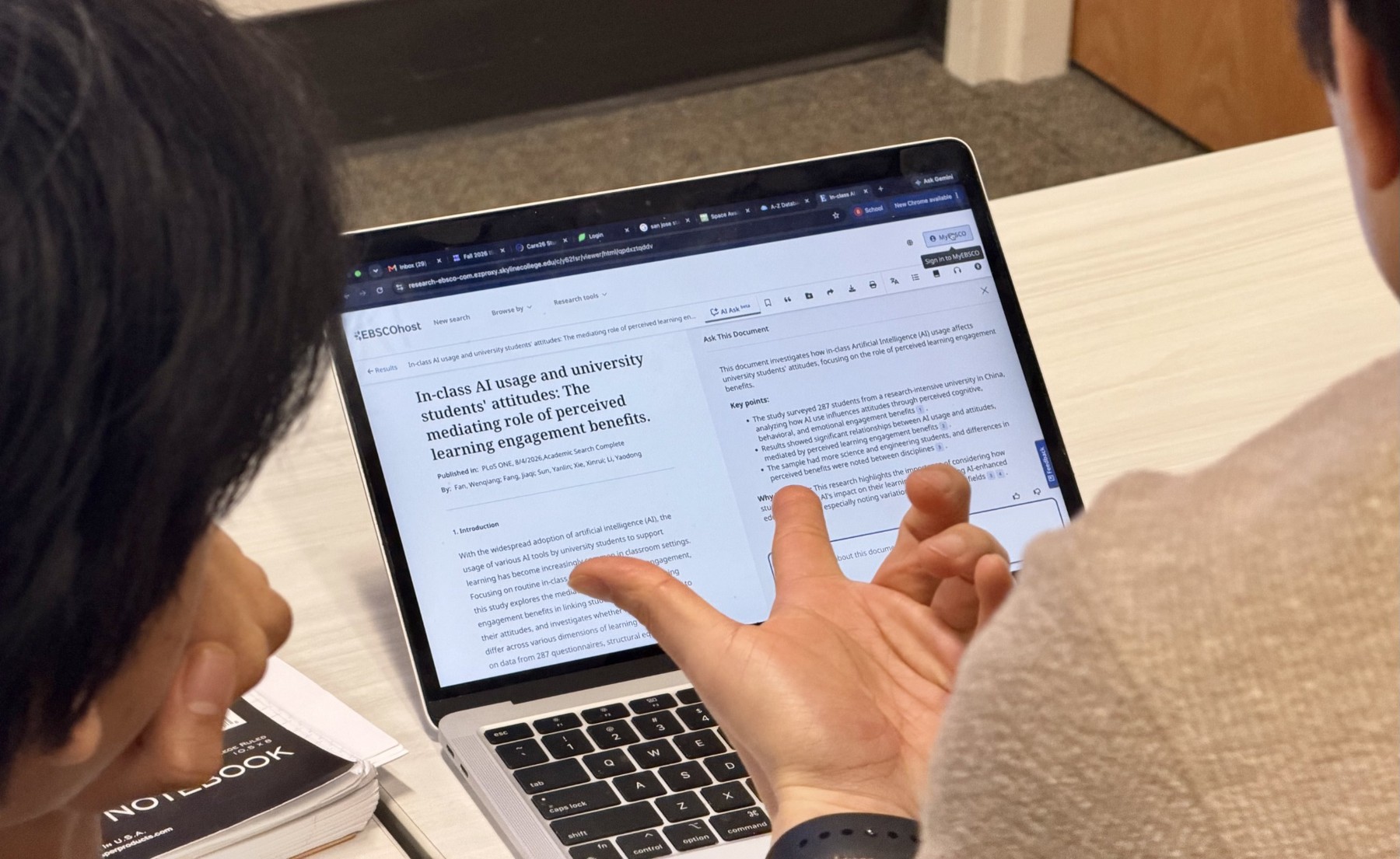
Exploring research on AI use together during a student consultation.
BUS 123 · Group consultation and separate individual follow-up · October 2026
Researching AI use among college students
The session. A different BUS 123 group wanted to investigate AI use among college students. In our initial meeting, we explored what they meant by “AI use,” whom they could realistically survey, and what they wanted to learn. I demonstrated searches for related research and discussed how scholarly articles differed from other publications.
Working through it together. In a separate follow-up, one student returned with draft survey questions and asked for help connecting the pieces of the project. We examined overlapping response options, which questions served the research focus, and how much data the group could manage. The student asked whether a question about AI making someone a better learner might lead respondents toward a particular answer. We discussed neutral wording, leaving the student and group to decide how to revise their survey.
Progress and next steps. The student described the follow-up as direct and useful for the clarification he needed. Bringing back a draft gave us a concrete opportunity to examine research decisions together. I provided related resources and invited him to return with the revised questions. Reviewing the finished survey or paper would help me understand how the guidance was applied.
BUS 123 · Group consultation · October 19, 2026
Researching social media advertising and purchasing decisions
The session. This group was investigating how social media advertisements influence consumer purchasing decisions. They had prepared survey questions but needed help finding research to support the project.
Working through it together. I began by asking what they wanted to understand, then helped them break the topic into searchable ideas such as consumer behaviour, emotions, price, scarcity, and fear of missing out. I demonstrated keyword searches and filters in Google Scholar and library databases. A student then shared their screen and practised searching while I offered guidance. We also discussed keeping the scope manageable within their timeline.
Progress and next steps. The students had search terms and resources they could continue using. Their next task was to select and review relevant articles, then decide how the findings connected to their question. I invited them to return as the project developed.
Faculty Consultation
Planning with faculty helps me connect information literacy to the readings, assignments, and questions students are already working through.
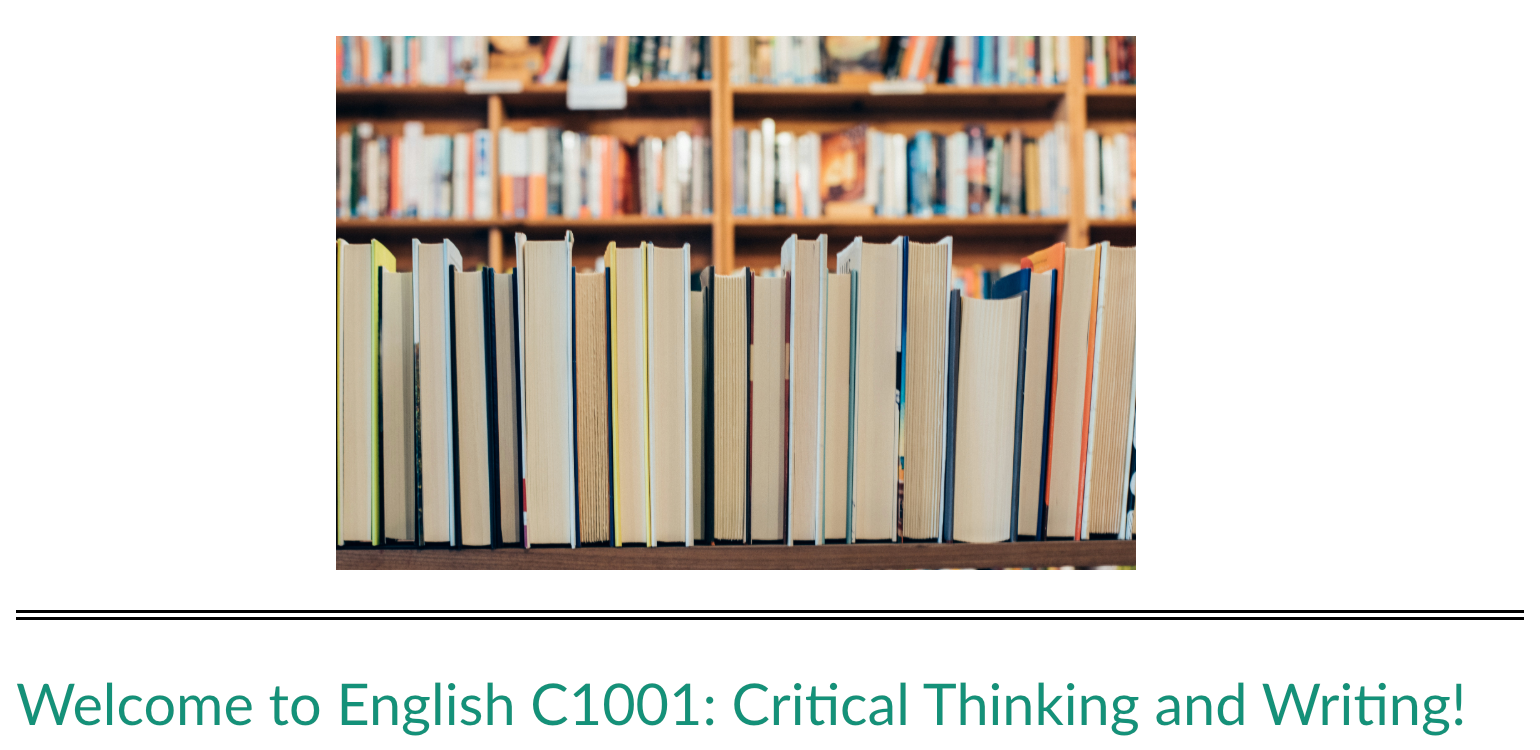
ENGL C1001: Critical Thinking and Writing, the course at the centre of my planning with Lisa Weiss.
ENGL C1001 · ZTC course · Professor Lisa Weiss
Building information literacy into the course module
The collaboration. Lisa and I worked very closely to build library information literacy into her ZTC course, ENGL C1001: Critical Thinking and Writing. As I crafted the lessons, I kept that focus in mind. I wanted to challenge students to think beyond the text, question claims, and consider how other sources might extend or complicate what they were reading. Our planning centred on Anzaldúa’s Chapter 5 in Borderlands/La Frontera and Carillo and Horning’s reading on evaluating the credibility of online sources.
Working through it together. Lisa and I also worked together on in-class essay and journal prompts, connecting the library lessons with the thinking and writing students would do in the course. We wanted the lessons to be relevant to that week’s readings and useful beyond the class. I developed a separate worksheet for each lesson, designed to help students follow the process and keep a reference for later. The first lesson focused on demonstrating SIFT to evaluate web content. The second gave students time to search a scholarly database using ideas drawn from the readings, with support as they worked.
What this led to. The library materials became a component of the module alongside the reading text, giving students something to revisit when researching independently. The consultation work helped connect the instructor’s course goals with guided practice in finding and evaluating information.